When a dishwasher in Lacey stops draining or leaves grit on the glasses, the neighbors’ units are often close behind. Builder packages installed together tend to fail together.
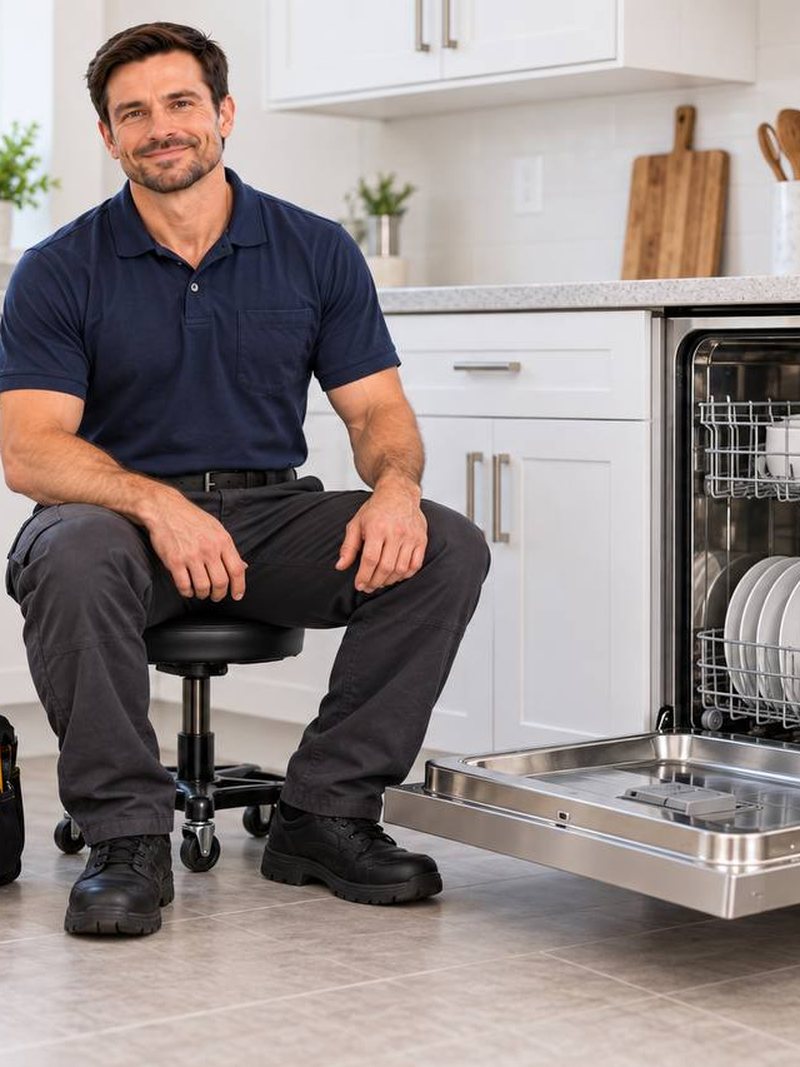
Walk a street in Hawks Prairie or Horizon Pointe and the kitchens look alike: same cabinets, same stainless finish, same dishwasher the builder ordered for every lot. Those machines went in within months of each other and have run on the same water since, so drain pumps, door gaskets and control boards tend to reach their limits in the same season. Lacey’s city water runs soft to moderately hard, which keeps heavy scale down, but a few wells carry trace iron and manganese that can stain the tub and settle in the inlet screen. Softer water also makes detergent go farther than the label assumes; full scoops cause suds and cloudy etching on glassware. The 1960s homes in Tanglewilde and Thompson Place bring a different issue: older plumbing and tight cabinets under the sink.
Here is a call we see often in the Meridian Campus townhomes: water sits in the bottom after every cycle, and the panel shows a drain code. The homeowner has already cleaned the filter. We check the easy links first. Is the knockout plug still in the disposal inlet, if a disposal went in later? Is the drain hose looped high under the counter, or sagging where it can siphon? Then we pull the filter housing and look into the pump for glass, a cherry pit or a label off a jar. If the impeller spins freely, we meter the pump motor while the control calls for drain. The answer is usually a single part, most often the pump, sometimes the check valve or a hose pinched behind the cabinet. We name it, write the price, and get the water moving.
| What you see | Probable cause | Our response |
|---|---|---|
| Standing water in the tub once the cycle ends | Clogged filter, blocked pump impeller or kinked drain hose | Clear the filter path, then meter the drain pump under load |
| Glasses cloudy or rough to the touch | Too much detergent for the water, causing etching | Check dose, rinse aid and the temperature of incoming water |
| Reddish or brown stain on the tub | Iron or manganese carried in by the water | Inspect the inlet screen and explain cleaning and prevention steps |
| Dishes dirty, spray arms barely turning | Plugged spray arm holes, low fill or a weak circulation pump | Check the fill level, the spray arms and the circulation motor |
| Water on the floor or a swollen seam | A worn door gasket, a weeping pump seal or a loosened inlet fitting | Find the drip with a light and dry towels, then fix that joint |
| Brand · code | Meaning | Our next step |
|---|---|---|
| Bosch · E24 | Water is not draining; the hose or filter path is blocked | Check the hose, disposal plug and pump cover, then test the pump |
| Bosch · E15 | Leak protection tripped after water reached the base pan | Find the leak source before drying the base and resetting the float |
| LG · IE | Water level stayed too low after ten minutes of filling | Check the supply valve and inlet screen, then meter the inlet valve |
| Whirlpool · F8E4 | Float switch detects water in the base drip tray | Trace the water to its source, check for suds, then clear the tray |
Book by phone or online, and a text brings the arrival window. At the kitchen, our technician reads any code on the panel, then proves it: a meter on the pump or valve, a look at the fill level, a check of the drain path. You learn which part failed in ordinary words and see one written price. On the money: the diagnostic runs $99, and approving the repair makes it part of that written total; if you would rather not proceed, $99 settles the visit. Drain pumps, inlet valves and door gaskets for common models ride on the van, and a part we must order gets fitted later, with no trip fee of its own. We finish with a test cycle, a dried floor and the warranty in writing.
Partly. Machines installed together share the same age, the same water and often the same weak part, so several on one block in Hawks Prairie or Horizon Pointe can need a drain pump or gasket in the same stretch of a couple of years. It does not mean yours was defective, only that it reached the same wear point as its neighbors.
Softer water lets detergent work harder, so a full scoop or a heavy pod can leave more chemical than the load needs. Over time that etches glass, and etching does not wash off. Cut the dose back and add rinse aid. If the film wipes away with vinegar, it is mineral or residue; if it stays, the glass is etched for good.
Yes, especially laminate or engineered wood, which is common in newer townhomes. Many machines have a base pan and float that shut things down and post a code, but a slow drip at a fitting can seep past it. If you see a raised seam near the dishwasher, shut the valve under the sink and book a visit. We find the drip before replacing anything.
The diagnostic is $99. If you go ahead, that $99 already sits within the written total you saw; if you decline, the visit costs $99 and nothing else. There are no ranges and no surprise add-ons. Still covered by the maker? We flag that at the start so the maker pays for what it should.
Often, yes. The pumps, valves and gaskets that fail on these machines are ordinary parts, and the tub and racks usually outlast them. We are less keen when the tub is cracked, rust has eaten the racks and the control board has failed as well. You get the written price and our view, and the decision stays with you.
The fault gets named and priced on paper; approve the work and the visit is already inside that figure.