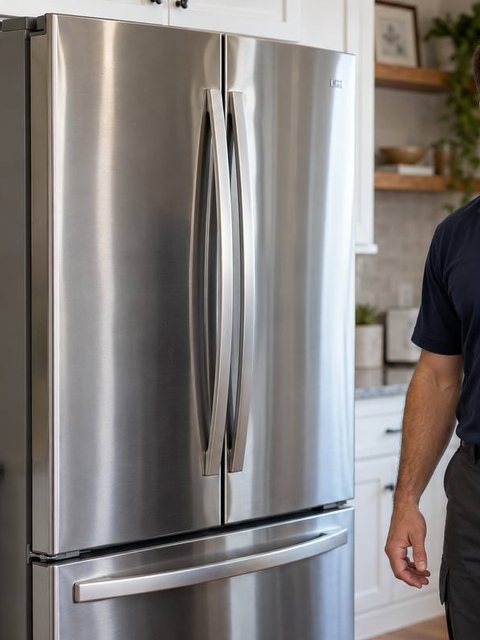
A Lacey refrigerator that runs warm after a PSE outage usually has one failed part, not a ruined machine. We find it: fan motor, defrost heater, thermistor or board.
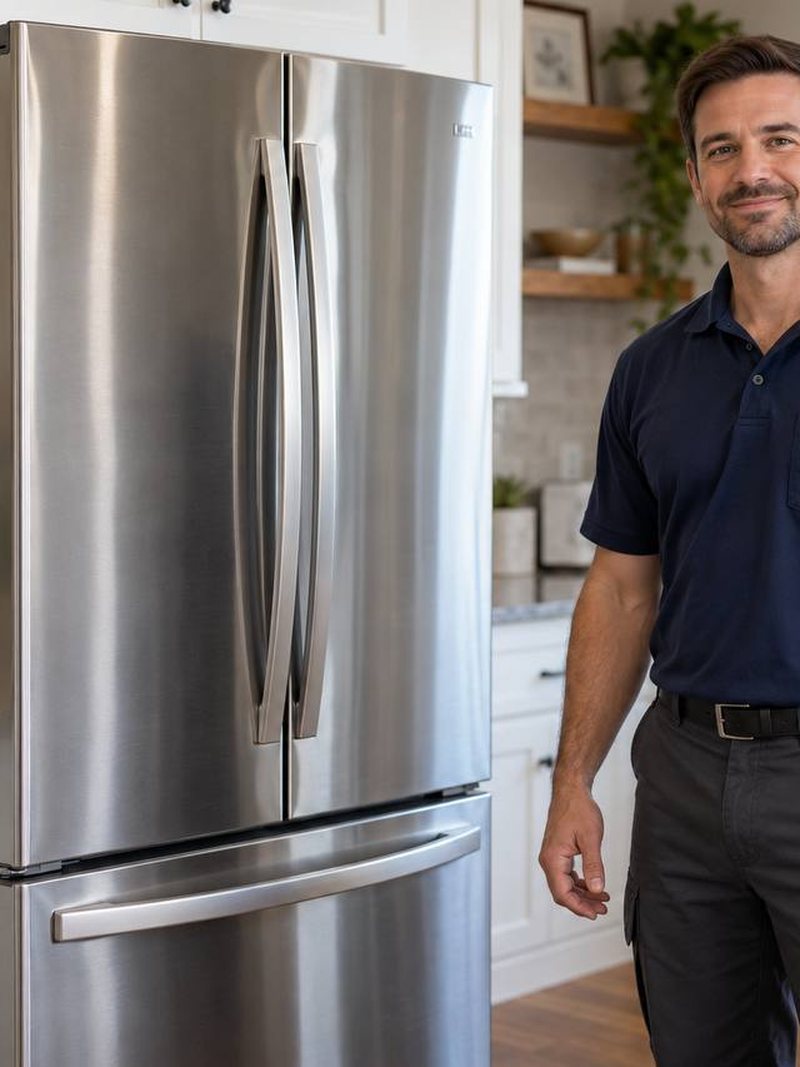
Lacey’s housing is young by Thurston County standards. The Lakes filled in during the late 1980s and early 1990s, Hawks Prairie’s master-planned streets came later, and a large share of the city has gone up this century. Many kitchens still hold the French-door or bottom-freezer model the builder installed, and a lot of those units are reaching the age when fan motors, defrost heaters and door gaskets give out. Refrigerators here all run on PSE electricity, so every fall windstorm tests them. A hard restart after an outage can leave a control confused, or a compressor straining against a frosted evaporator. Garages add a second layer: a spare freezer in an uninsulated Hawks Prairie garage sees freezing nights in January and warm afternoons in August.
A typical fall call: a townhome off Marvin Road, power back after a windstorm, the top shelf sitting at 50 degrees while the freezer reads normal. The display blinked PO, the homeowner cleared it, and the fresh-food side never recovered. On a model like that, cold air reaches the refrigerator through a fan and a damper. We read shelf temperatures with a thermometer, listen for the evaporator fan, and pull the rear freezer panel to look for a coil packed in frost. After that we test continuity across the thermal fuse, thermistor and defrost heater. If the defrost circuit quit around the restart, the coil iced solid and the fan had nothing to push. The part that quit gets named in plain terms, the figure goes on paper, and most of these jobs wrap up with stock from the van.
| What you see | Usually behind it | Our next move |
|---|---|---|
| Top shelves warm while the freezer holds | Evaporator buried in frost from a dead defrost heater, or a jammed damper | Pull the rear panel, meter the defrost circuit, check the airflow |
| Water pooling under the crisper drawers | Defrost drain line frozen or plugged | Thaw and flush the line, then track down what iced it |
| A click, then silence, every few minutes | Compressor start relay or overload tripping | Measure the start parts and amp draw before blaming the compressor |
| Garage freezer soft in January | Cold garage fooling the thermostat, or a tired door gasket | Check the thermostat, the gasket and the model’s garage rating |
| Dark display or dead buttons after an outage | A board hit by the surge, or an on-board fuse that opened | Test incoming voltage and board outputs before ordering anything |
| Brand · code | Meaning | Our next step |
|---|---|---|
| LG · Er dH | Defrost sensor did not warm enough during the defrost cycle | Meter the defrost heater, sensor and thermal fuse before naming a part |
| LG · Er FF | Freezer fan fault; cold air stops circulating through the box | Check the blade for ice lock, then test the motor and wiring |
| Frigidaire · SY EF | Control board reports a fault at the evaporator fan | Look for frost at the fan, then meter the motor circuit |
| Whirlpool · PO | Power was off and the freezer rose to 18°F or warmer | Check food temperatures, then watch the box pull down with a thermometer |
You book by phone or online, and a text gives you the arrival window. Plenty of Hawks Prairie and Martin Way homes carry an Olympia mailing address; we serve them the same way. At the refrigerator, our technician reads any code, then checks it against reality with a thermometer in the box and a meter on the suspect circuit. We tell you what failed in everyday words and put the repair figure in writing. Say yes, and the $99 becomes a line inside that figure; say no, and the $99 is all you owe. Our vans stock the fans, sensors and heaters these models use up. A part on order means one more stop to install it, with no added trip fee, and a written warranty when we finish.
A warm box moves to the front of our schedule. When the day’s route allows, a technician comes the same day; when it does not, we set the earliest window and text it to you. Until we arrive, open the doors as little as you can, pack milk, meat and leftovers into an iced cooler, and clear anything crowding the condenser area under or behind the unit.
It may be, and we check that before anything else. Builder-installed refrigerators in newer subdivisions sometimes still fall inside the maker’s coverage, and sealed-system coverage can run longer than the basic term. Have the model and serial sticker handy when you book. If the maker should pay, we point you there first; if coverage has ended, we diagnose and quote like any other call.
Many refrigerator-freezers let the fresh-food thermostat decide when the compressor runs. When the garage is cold, that thermostat seldom calls for cooling, and the freezer goes without. A few models carry a garage rating and cope; most do not. We look up the rating, test the thermostat and gasket, and say in plain terms whether a part will fix it or the garage itself is the trouble.
The visit is $99. Approve the repair we write up and those dollars count toward its total instead of stacking on top. Turn it down, and you pay the $99 while we pack our tools. Whichever way you go, you hold the number in writing before a panel comes off the refrigerator, and it is a single number, not a range that creeps upward.
Yes. Tanglewilde, the Lakes, Hawks Prairie and the streets off Martin Way are all regular ground for our technicians. Older Tanglewilde kitchens often hold a newer refrigerator squeezed into a cabinet opening sized for a smaller one, so we also check that the condenser can breathe in that tight spot. Poor airflow there shortens compressor life and makes the box run warm.
The fault gets named and priced on paper; approve the work and the visit is already inside that figure.