Butter soft on the door shelf, a freezer that hums but won’t get below twenty degrees, a display blinking after a windstorm outage.
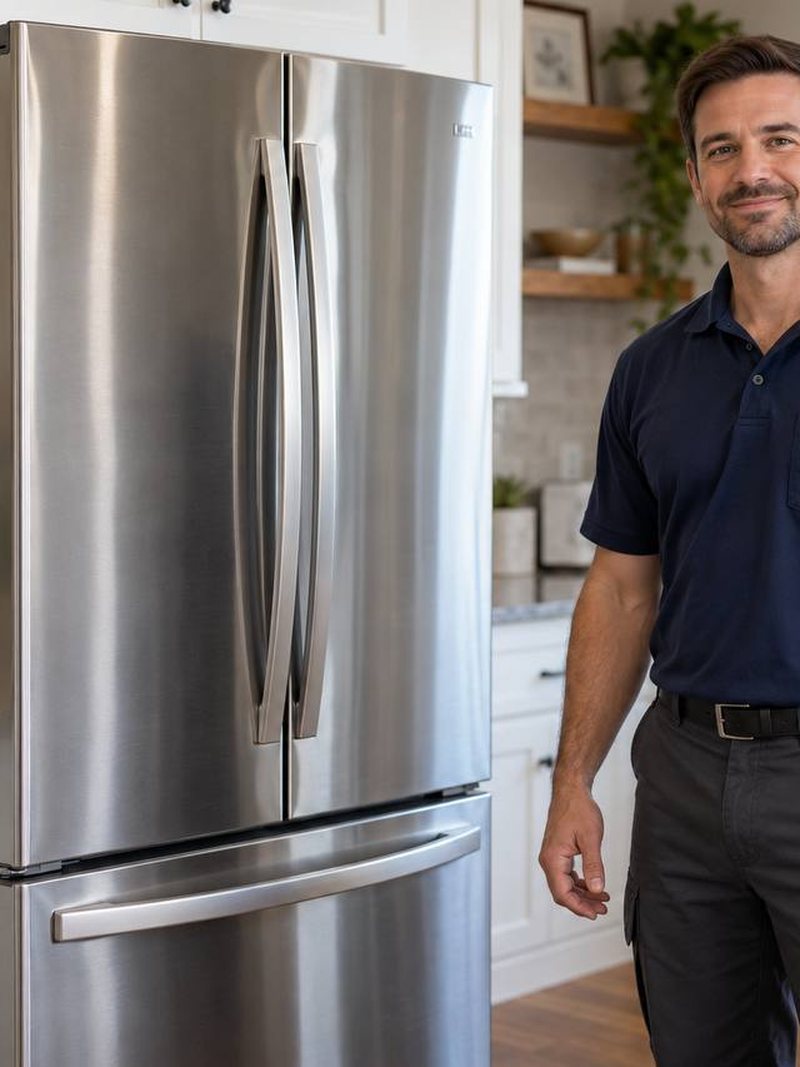
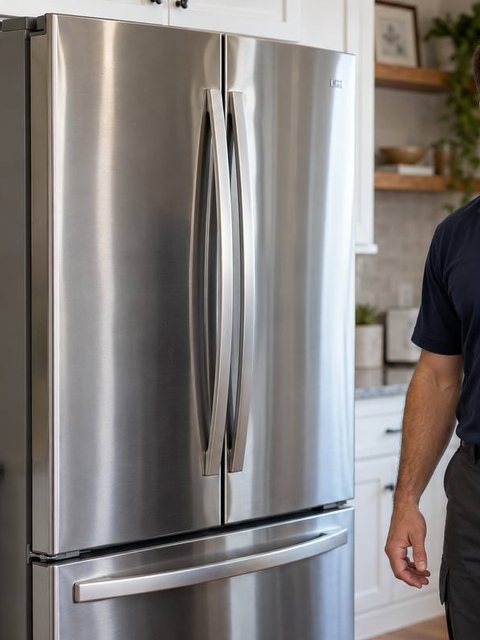
Nearly half of Olympia’s houses were built before 1980, and a kitchen in South Capitol or a Bigelow bungalow was rarely planned around a thirty-six-inch French-door refrigerator. We find them wedged into old alcoves with barely a finger’s width of clearance around the cabinet, the condenser coil furred with dust and pet hair, the compressor running long to make up for it. Soft McAllister water is easy on the water valve, so mineral scale is seldom the story here. Humidity is. With damp air near eighty percent for much of the year, every door opening carries moisture that ends up as frost on the evaporator, and a weak defrost heater or a tired gasket turns that frost into a stalled fan. Fall windstorms add outages, then a surge when the line comes back.
A typical case: a Westside rambler off Cooper Point Road loses power overnight in a November blow. By morning the lights are back and the freezer feels fine, but the fresh-food side sits near fifty degrees and a Frigidaire panel shows PF. Our technician starts with a thermometer in both compartments, then watches whether the compressor and condenser fan actually start. After an outage we look closely at the start relay and overload, the control board for a scorched trace, and the evaporator fan, since a blade frozen in place stops cold air from crossing into the fresh-food section. We check the damper between compartments too. If food is at risk, we say so plainly and help you decide what goes into a cooler while we work.
| Symptom | What is usually behind it | How we handle it |
|---|---|---|
| Freezer cold, fresh-food side warm | Defrost heater, sensor or control quit, so the evaporator frosted over | Meter the defrost circuit, clear the frost, replace the failed part |
| Clicking every few minutes, no hum | Compressor start relay or overload tripping | Test the relay and overload, then measure the compressor windings |
| Puddle beneath the crisper drawers | Drain line iced shut or clogged with debris | Steam the line open, then work out what let it freeze |
| Frost ring around the freezer door | Torn or flattened gasket letting damp air in | Check the seal and door alignment, replace the gasket if torn |
| Runs nonstop, cabinet sides warm | Coil under the cabinet matted with dust, or its fan no longer spinning | Vacuum the coil, meter the fan motor, take both temperatures again |
| Brand · code | Meaning | Our next step |
|---|---|---|
| LG · Er FF | Freezer fan problem, frequently caused by frost around the blade | We look for ice at the fan, then test the defrost heater and sensor |
| LG · Er dH | The defrost cycle ran more than an hour without finishing | We meter the defrost heater, sensor and wiring before naming any part |
| Frigidaire · PF | Power was interrupted, often by an outage, and the display flags it | We confirm temperatures recovered and check the control and relay for surge damage |
| Frigidaire · H or HI | The refrigerator or freezer has run too warm for over an hour | We verify with a thermometer, then trace the cooling fault from compressor to fan |
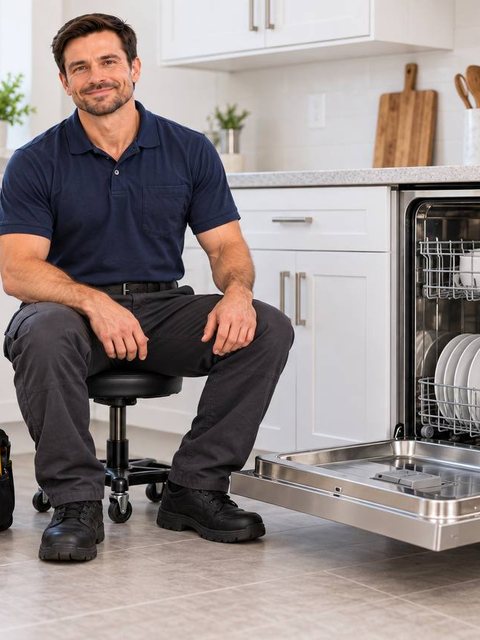
You request a time by phone or online, and we text an arrival window so you aren’t pinned to the house all day. A warm refrigerator moves up the list whenever the day allows. Our technician reads any code, then proves the fault with a meter and a thermometer, because a code narrows the circuit without naming the part. We explain which part gave out and why, then write down a single repair figure. Accepting it tucks the $99 into the total; pass, and our bill stops at $99. Most fixes come off the van. When a part needs ordering, our follow-up stop to install it adds nothing for travel. And when the manufacturer’s coverage is still in force, you hear that from us first.
Most often it is frost. The evaporator sits behind the freezer panel, and when the defrost heater, sensor or control stops doing its job, ice builds until the fan can’t push air into the fresh-food side. Olympia’s damp air speeds that up. We confirm it by measuring the defrost circuit rather than guessing, then clear the frost and replace the piece that failed.
Leaving it plugged in is usually fine, but a surge when power returns can hurt a control board or start relay. Some people switch the breaker off during a long outage and back on once the lights stay steady. If the box doesn’t cool within a few hours of power returning, or the display shows an error, call us and mention the outage.
Yes. Garage and shop freezers are common on the Westside and out toward Boston Harbor, and they live a harder life: dust, damp and cold winter nights that can confuse the thermostat on some upright models. We check the condenser, the door seal and the circuit feeding the unit, since shared garage outlets trip more often than kitchen ones.
Often, if the sealed system is sound. A fan motor, defrost heater, relay or gasket is an ordinary repair on a fifteen-year-old unit. When the compressor has died or refrigerant is escaping from an aging model, the choice gets tougher; we set the written figure beside everything else we notice in the machine and leave the decision with you.
Whirlpool, GE, GE Profile, Café, LG, Maytag, Frigidaire, KitchenAid, Electrolux, Kenmore and Amana cover most of what we see, from top-freezer units in Eastside rentals to built-in style models in newer Cooper Point kitchens. Still inside the manufacturer’s coverage? We flag that before anything else so you can use it.
The fault gets named and priced on paper; approve the work and the visit is already inside that figure.