Water left in the drum, a spin that shakes the whole floor, a door boot gone black with mildew.
A lot of Olympia laundry happens below grade or out back. Bungalows in Bigelow and South Capitol put the washer in a basement corner, ramblers on the Westside tuck it into a garage or mudroom, and split-levels in Forest Hills set it on a lower floor beside the furnace. Those spaces stay damp. With humidity near eighty percent and fog through fall and winter, a front-loader’s door boot rarely dries between loads, and mildew moves in. Soft McAllister water adds another habit: people keep the detergent dose they used somewhere with hard water, and the washer throws a suds code halfway through the rinse. Older wood floors flex under a fast spin, too, which can set off balance errors on a perfectly good machine.
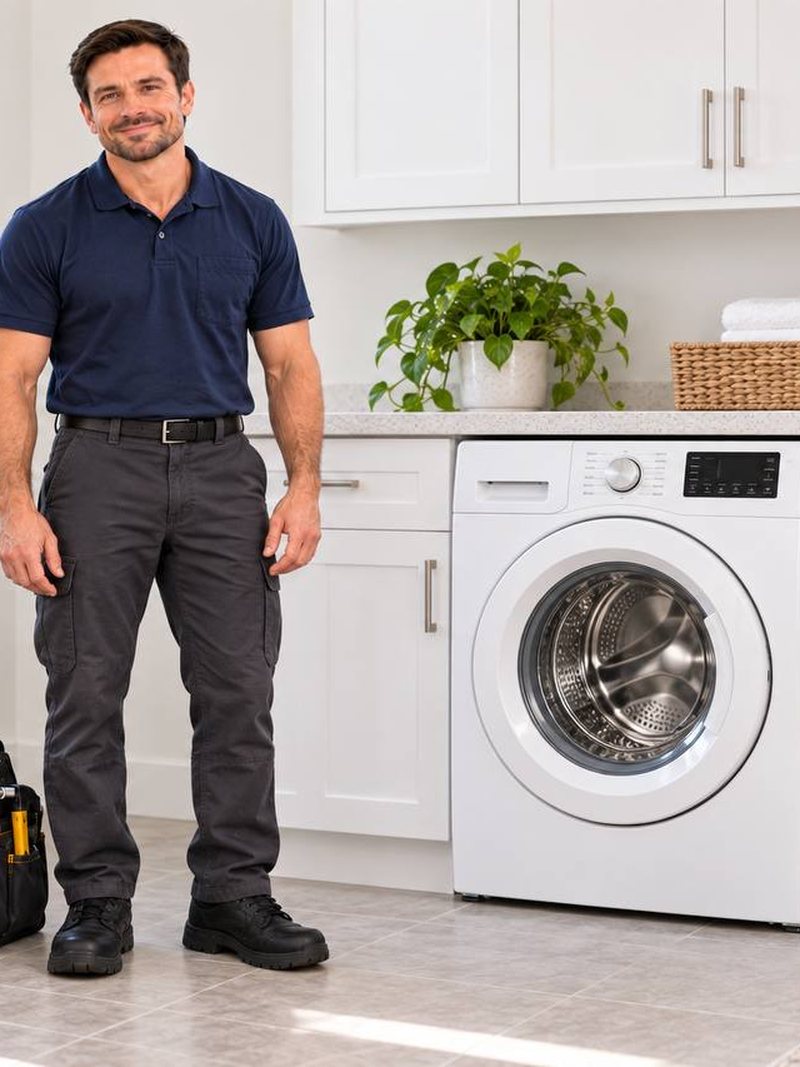
A typical call: a Wildwood house, a Whirlpool front-loader in a basement that stays cool all year, and a drum still holding water with F9 E1 on the display. Our technician starts at the bottom of the machine. We open the drain pump trap, where we routinely fish out bobby pins, stray socks and hair ties, then check the pump motor’s windings with a meter. A healthy reading sends us to the standpipe height and the hose, since some basement setups ask the pump to push water higher than it was built to. While we are down there, the door boot gets a look for splits and the tub bearings get a listen, because a washer that lives in damp air usually has more than one thing worth mentioning, and you should hear all of it.
| Symptom | Where it usually starts | How we handle it |
|---|---|---|
| Drum still holding water | Clogged pump trap, kinked hose or failed drain pump | Clear the trap, check hose and standpipe height, meter the pump |
| Violent shaking on spin | Worn shocks or springs, or a floor that flexes | Check leveling, test shocks and springs, watch the floor during spin |
| Black spotting and a sour odor at the boot | Damp air feeding mildew in the gasket and dispenser | Clean or replace the boot, check the drain path and drying habits |
| Roar that grows with spin speed | Worn tub bearings, often after a rear seal leak | Inspect the seal and bearings, explain repair against replacement |
| Door won’t lock, washer won’t start | Door lock assembly or lid switch failure | Meter the lock or switch, confirm the control is sending power |
| Brand · code | Meaning | Our next step |
|---|---|---|
| Whirlpool · Sd or Sud | Too many suds detected in the washing machine | We run a rinse to clear suds, then settle on a smaller detergent dose |
| Whirlpool · F9 E1 | Draining takes longer than expected, typically over eight minutes | We clear the pump filter, check the hose and meter the drain pump |
| Samsung · dC | Unbalanced load detected inside the tub | We redistribute the load, then test suspension, leveling and how the floor flexes |
| Samsung · 4C | Water is not entering the washer correctly | We check the house valves and inlet screens, then test the water valve |
Reach us by phone or online, then watch for a text with your arrival window; it helps when your day is built around a desk at a state agency or a rotation at the hospital. Our technician reads the code and then proves it, metering the pump, lock or motor instead of trusting the display. You hear the fault in plain words and get a single written price. If you approve, the $99 you spent on the diagnosis sits inside that repair figure, not on a separate line. If you pass, that $99 settles it. Pumps, locks, boots and valves usually come off the van. We run a full test load, wipe down the machine and hand you a written warranty.
Soft water. Olympia’s city water needs far less detergent than the cap line suggests, and high-efficiency washers sense the extra foam and pause to rinse it out. Cut the dose sharply, use HE detergent only, then run the clean cycle. A code that keeps showing at a light dose points to the pressure sensor or the drain, and that is when our team should take a look.
Prop the door and the dispenser drawer open after each load, dry the gasket fold once the day’s washing is done, and move wet clothes out promptly. In a damp basement, a small fan or dehumidifier does more than any cleaner. A split boot, or mildew worked deep into the rubber, calls for a new one, and we check the drain path on the same visit.
It can be either, and often both. Older joists in Bigelow or Eastside basements and upstairs laundry rooms flex under a fast spin. We level the washer, check the shocks and springs, and watch how the floor moves during a test spin. When the washer checks out and the joists are to blame, you hear that from us, along with ideas like a firmer base or a gentler spin setting.
Yes. Speed Queen, Maytag, Whirlpool, GE and Kenmore top-loaders are common in rentals and older homes. They tend to fail at the lid switch, drive coupler, pump or transmission. We work on front-loaders from LG, Samsung, Electrolux, Bosch and others as well. Still inside the maker’s warranty period? We raise that at the start.
Then we order it, and the return visit to install it carries no second trip charge. We tell you the expected wait and whether the washer can still be used safely in the meantime. The usual suspects, like pumps, door locks, boots and inlet valves, ride on the van, so a second visit is the exception rather than the rule.
The fault gets named and priced on paper; approve the work and the visit is already inside that figure.