An Er IF on the display, a bin that stays empty, cubes that come out small and hollow.
Ice makers in Olympia fail for local reasons. Because the McAllister Wellfield supply is soft, inlet valves in town rarely crust over, and we seldom replace one for minerals the way we might on a hard-water well. What we do find is the plumbing behind the refrigerator. Many older homes on the Eastside, along Capitol Boulevard in Carlyon and through Southeast Olympia got an ice maker line long after the kitchen was built, often thin tubing snaking up from a crawlspace or along a baseboard. Around seventy-eight freezing nights a year can chill a line that runs near a foundation vent. Damp air matters too. A humid kitchen feeds frost onto the ice maker fan and the fill tube, which is where a lot of our LG and Whirlpool calls begin.
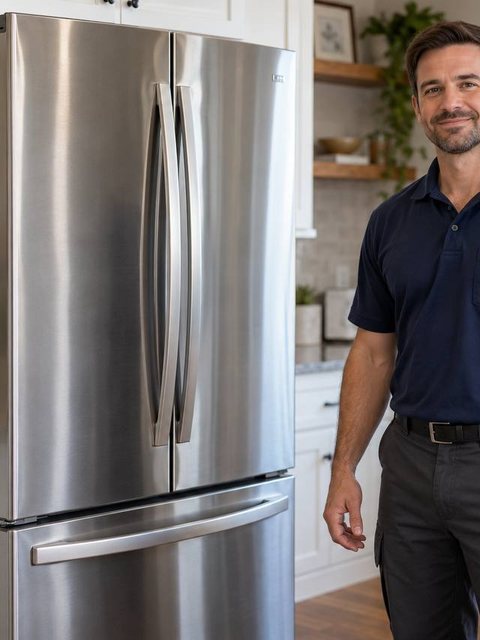
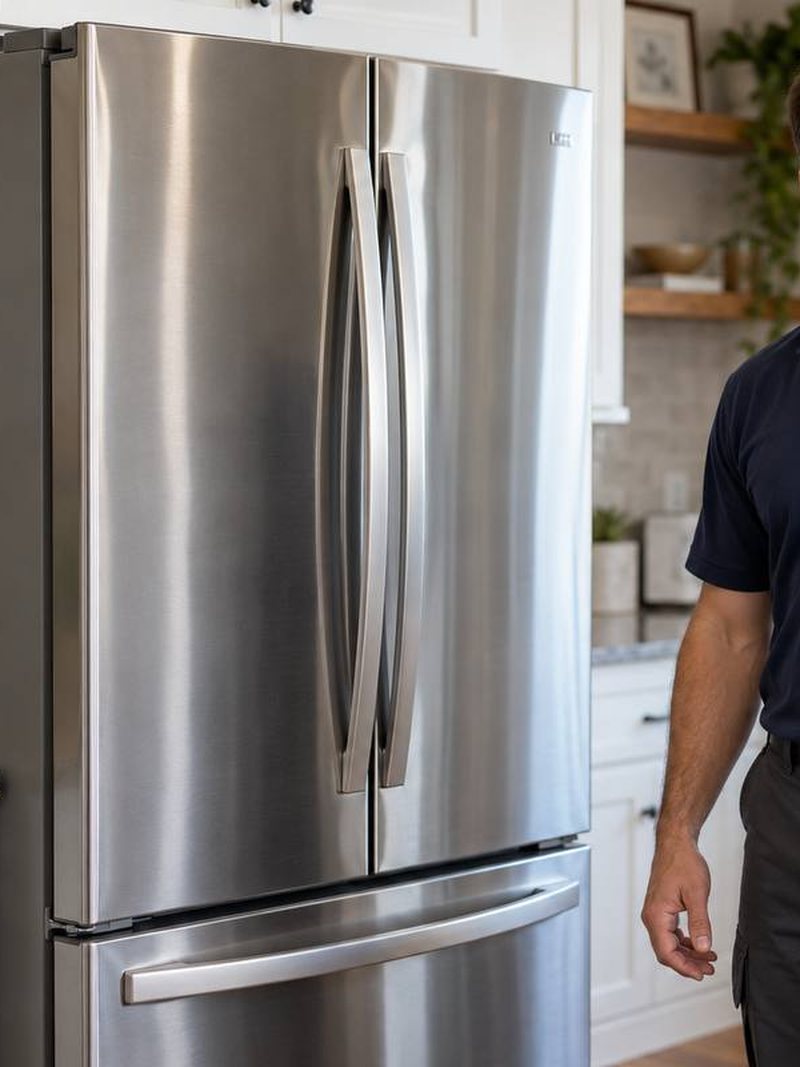
Picture a Bigelow bungalow with a French-door LG added during a kitchen update. The bin has been half full for a week, then empty, and the display now reads Er IF. Our technician opens the ice compartment first, because that code usually means frost has locked up the ice maker fan. We melt it out, but melting is not the repair. We check why the frost formed: a door seal that has flattened and leaks air, a defrost drain or heater circuit that isn’t clearing the coil, or a fill tube dribbling water that freezes where it lands. Then we measure water pressure at the valve, confirm the filter isn’t choking flow, and run a harvest to watch the ejector turn and drop cubes into the bin.
| Sign | Likely cause | What we do |
|---|---|---|
| No ice, water dispenser still works | Ice maker module, mold thermostat or a frozen fill tube | Test the module and heater, thaw and inspect the fill tube |
| No ice and no water | Closed supply valve, kinked line or failed inlet valve | Check supply pressure, then meter the inlet valve solenoid |
| Small, hollow or clumped cubes | Weak supply pressure or a filter packed with sediment | Measure flow at the valve and compare with the filter bypassed |
| Water dripping into the bin | Inlet valve not closing all the way | Watch the valve after a fill; a weeping valve gets replaced |
| Ice stuck in the chute | Auger motor, dispenser flap or cubes fused by temperature swings | Clear the chute, test the auger and check the flap and its heater |
| Brand · code | Meaning | Our next step |
|---|---|---|
| LG · Er IF | Ice maker fan problem, often from frost buildup around it | We clear the frost, then find the seal or defrost fault that caused it |
| LG · Er IS | Ice maker fan motor fault or a disconnected ice maker sensor | We check the sensor connection and resistance before touching the fan motor |
| LG · Er gF | Flow sensor error or low water pressure reaching the refrigerator | We measure incoming pressure and flow, then test the flow sensor itself |
| Frigidaire · DI SP | Ice is jammed in the dispenser chute | We clear the chute, then check the auger and chute door for binding |
Book by phone or online and we send a text with your arrival window, so a morning at a state office or a shift at the hospital doesn’t have to bend around an open-ended wait. At the house, our technician reads any code, then tests the valve, sensor, heater and fan with a meter instead of trusting the display alone. You hear which component gave up and see one figure for it on paper. That $99 diagnosis disappears into the repair bill once you accept; decline and that $99 closes out the visit. Ice maker modules and inlet valves usually ride on the van. If yours needs something we don’t carry, the part gets ordered, and our return visit to install it carries no extra travel charge.
Cold snaps are hard on supply lines that run through crawlspaces or along outside walls, which is common in older Olympia houses. A partly frozen line gives slow fills and hollow cubes; a fully frozen one stops production. We trace the route of the line and check the fill tube behind the freezer, and we can suggest a warmer path if the line keeps freezing.
Sometimes both. An ice maker only cycles when the freezer is cold enough. If the freezer is running warm, the ice maker waits and looks broken. That is why our technicians put a thermometer in the freezer before blaming the module. A weak freezer points to fans, defrost parts or the sealed system, and we tell you which before pricing anything.
Mostly for the better. City water here carries little hardness, so inlet valves and fill tubes stay fairly clean of scale, and faults tend to be mechanical or frost-related. Homes on private wells outside city limits are different, since iron and sediment can clog the valve screen. We check that screen whenever a well is part of the picture.
You can, and some people do. The risk is swapping a working module when the real fault is a frozen fill tube, a failed inlet valve or a warm freezer. If you want the failed part confirmed first, our diagnostic does that with a meter. And when the refrigerator is still inside the maker’s warranty period, we say so up front so you can lean on that coverage.
We set an arrival window by text when you book, and it depends on the day’s route across Olympia, Lacey and Tumwater. A lone ice maker fault can wait a little; a refrigerator losing cold cannot, so warm boxes move up the list. If your freezer is losing cold along with the ice, tell us when you reach out.
The fault gets named and priced on paper; approve the work and the visit is already inside that figure.